Park the Car, Grow Some Roots: The Case for the Seven-Day Small Town
The Gas Pedal Is a Lie We Tell Ourselves
Let's be honest with ourselves for a minute. American travel culture has a bit of a speed problem. We measure vacations in miles covered, states checked off, and national parks "done" before lunch. The road trip — sacred institution that it is — has quietly trained us to believe that motion equals meaning. If you're not rolling, you're wasting precious PTO.
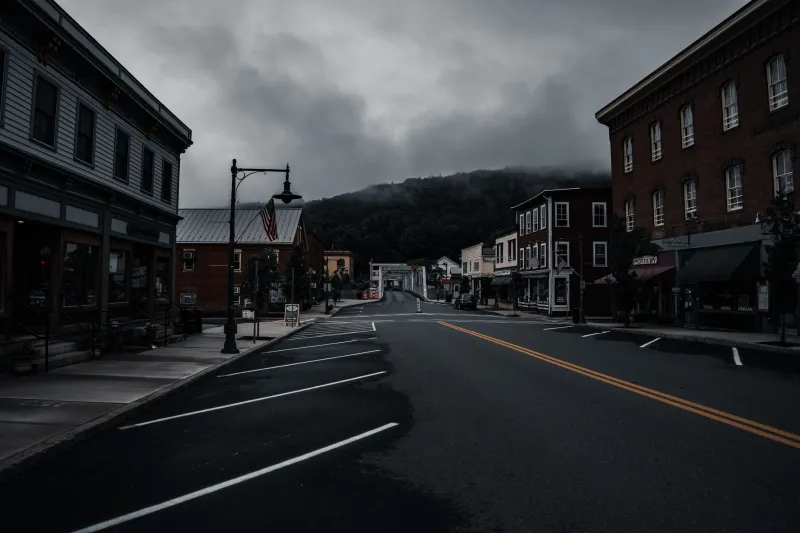
But here's a thought that might rattle your luggage: the best trip I took last year involved driving exactly 47 miles, once. Then I parked. For a week. In a town of 2,300 people.
I call it the planted trip, and I'm officially campaigning to make it a thing.
What Exactly Is a Planted Trip?
The rules are simple, almost aggressively so:
- Pick one small town — population somewhere between 800 and 10,000.
- Stay a minimum of seven nights.
- Drive no more than 30 minutes from your lodging, and only for supplies or a genuinely spectacular trailhead.
- No itinerary. None. I mean it.
That's it. No windshield-time math, no 6 a.m. alarms to "beat the crowds," no spreadsheet of attractions you'll inevitably abandon by day three. You plant yourself like a slightly sunburned perennial and you let the place grow around you.
Day Three Is When the Magic Happens
Here's the dirty secret about the standard road trip: you never stay anywhere long enough to see the second layer. Every town has a top layer — the main street mural, the bakery with the line out the door, the overlook with the plaque. That layer takes about four hours to consume. Then we get back on the highway, feeling accomplished.
The second layer only reveals itself to people who've been seen around. By day three of my planted trip, the woman at the diner had stopped giving me the newcomer once-over and started giving me the good coffee. By day four, the guy at the hardware store was telling me which trailheads the out-of-towners didn't know about. By day five, I was being politely scolded at the secondhand shop for paying full price when I "should've come back Thursday."
These interactions are impossible to schedule and unavailable for purchase. They are also, not coincidentally, the things you'll actually remember in five years — not the interstate sunset you photographed through a bug-splattered windshield.
The Unsung Heroes of Place
Every region has its root system, and it is not the visitors bureau. It's the people who maintain the trails on their own weekends. The retired teacher who runs the historical society and will talk your ear off about the 1972 flood. The church-basement thrift store staffed by women who know exactly which donated jacket belonged to whom.
A planted trip puts you in contact with this infrastructure of place. You can volunteer for a morning with the trail crew. You can show up to the Friday fish fry where everyone knows everyone. You can buy a $4 lamp from an estate sale and hear the entire biography of the person who owned it.
You cannot do any of this between fuel stops.
But Won't I Get Bored?
No — and I say this as someone whose attention span has been described as "squirrel-adjacent." Boredom, it turns out, is mostly a symptom of novelty addiction. When you strip away the constant churn of new landscapes, your brain stops skimming and starts noticing. The light on the water at 7 p.m. The way the same three trucks pass the coffee shop every morning. The fact that the bakery's cinnamon rolls are somehow different on Saturdays.
You'll also, crucially, rest. Real rest. The kind where you stop calculating drive times in your head and your shoulders unclench for the first time since roughly 2019.
How to Pick Your Town
A few field-tested criteria:
- A real diner or café. Not a chain. This is non-negotiable; it's your future social hub.
- Walkable core or a good trail network. You need somewhere to put your body daily.
- One genuinely weird thing. A roadside curiosity, an odd little museum, a listening bar in a former grain elevator. Every town has one; finding it is half the fun.
- Lodging with a porch. A cabin, a motel with chairs outside, a rented room above a shop. Porches are the native habitat of the planted traveler.
The Detour That Isn't a Detour
Look, we love a good detour here at Bonzivista. But there's a version of wandering that doesn't require wheels at all — the slow drift through a place until it stops being a destination and starts being, briefly, yours.
So here's the pitch: take one trip this year and don't go anywhere. Pick the town, book the week, and let the roots do their work. The road will still be there when you get back. It always is. That's kind of its whole deal.
See the sights. Take the detours. But every so often — plant yourself and stay a while.