Bars of Shame: 10 American Dead Zones Worth the Disconnection
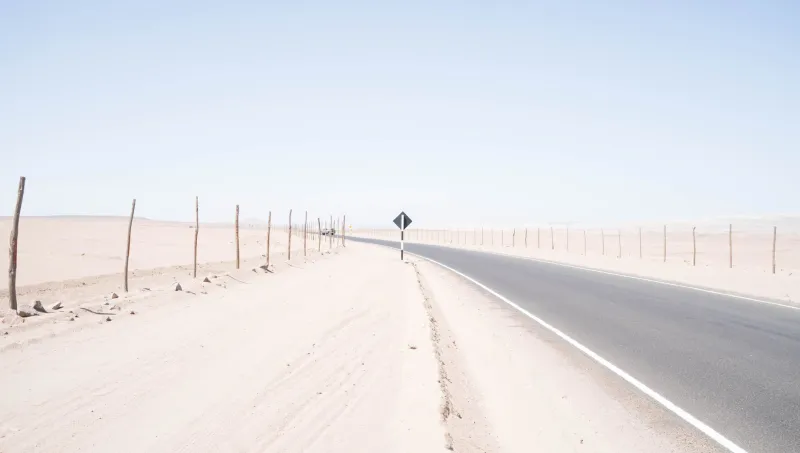
There's a moment that happens about ninety minutes into any properly remote drive in America. You glance at your phone and notice the signal indicator has quietly given up. One bar. Then nothing. And if you're like most of us, your stomach does a tiny, embarrassing flip — as if the absence of push notifications constitutes an emergency.
It doesn't. In fact, we'd argue the opposite: the places where your phone goes dark are often the exact places worth driving to. Screen fatigue is real, burnout is basically the national bird at this point, and the ultimate flex isn't posting from a beach — it's being unreachable on purpose. So here's our bucket list of dead zones, ranked by how good it feels to watch that signal disappear.
1. Great Basin National Park, Nevada
The nearest town, Baker, has a population you could fit into a single cul-de-sac. Once you're up on the Wheeler Peak Scenic Drive, your phone is a very expensive rock. Do offline: Tour Lehman Caves, stargaze until your neck hurts (this is an International Dark Sky Park), hike to the bristlecone pines — trees older than the concept of England. Stay: Two nights. Download before: Baker, Nevada, or Ely if you're coming from the east. Fill up on gas in Ely, too. This is not a suggestion.
2. The North Maine Woods
North of Baxter State Park, the logging roads stretch on forever and cell coverage stretches to approximately never. Do offline: Paddle the Allagash Wilderness Waterway, listen for loons, fail to see a moose, then see six moose in one day out of spite. Stay: Four days minimum — this is a commitment, not a detour. Download before: Millinocket. Then put the phone in the glovebox like a civilized person.
3. Big Bend National Park, Texas
The park is bigger than Rhode Island and the nearest decent hospital is over a mountain range. Coverage exists in scattered pockets, but treat it as decorative. Do offline: Soak in the hot springs by the Rio Grande, drive the Ross Maxwell Scenic Drive, and sit in the Chisos Basin at dusk doing absolutely nothing, magnificently. Stay: Three nights. Download before: Alpine, Texas — a genuinely charming last stop with real food and real signal.
4. Isle Royale National Park, Michigan
An island in Lake Superior accessible only by boat or seaplane, with no cell service to speak of. You have to want to get here, which filters out everyone who doesn't deserve it. Do offline: Hike the Greenstone Ridge, watch for wolves and moose (the ongoing predator-prey soap opera here is the longest-running study of its kind), and fall asleep to lake sounds. Stay: Three to five days — ferry schedules enforce this for you. Download before: Houghton or Copper Harbor, Michigan.
5. Canyonlands: The Maze District, Utah
Most of Canyonlands is remote. The Maze is remote with a capital M — one of the least accessible places in the lower 48, requiring high-clearance vehicles, serious prep, and a frank conversation with yourself about your driving skills. Do offline: Everything, because everything is hard out here, and that's the point. Stay: Only if you're experienced. Seriously. Download before: Hanksville or Green River, and file your itinerary with someone who'll notice if you don't come back.
6. The Owyhee Canyonlands, Oregon/Idaho/ Nevada
Often called the "Grand Canyon of Oregon," the Owyhee's deep river canyons and sagebrush sea sit under some of the darkest skies in the country. Do offline: Soak at the Birch Creek hot springs, drive the outback byways, and marvel that a place this dramatic can still be nearly empty on a summer weekend. Stay: Two nights. Download before: Jordan Valley, Oregon — a town so small the gas station is basically the mayor.
7. Dry Tortugas National Park, Florida
Seventy miles west of Key West by ferry or seaplane, Fort Jefferson rises out of turquoise water with no cell towers for company. Do offline: Snorkel the moat wall, tour the massive brick fort, and camp under the stars on a civil war-era parade ground surrounded by ocean. Stay: One night if you can score a campsite — day-trippers leave and the island becomes yours. Download before: Key West, obviously.
8. The Sawtooth Wilderness, Idaho
Idaho's crown range has jagged granite peaks, alpine lakes stacked like poker chips, and a cellular network that has clearly never heard of it. Do offline: Backpack into Stanley Lake basin, fish, read an actual paperback with a spine you cracked yourself. Stay: Three days. Download before: Boise or Stanley.
9. The Buffalo National River, Arkansas
America's first national river flows through Ozark hollows where the signal goes to die and the gravel roads go on forever. Do offline: Float a canoe stretch like the Tyler Bend to Gilbert run, hike to Hemmed-in-Hollow Falls, and eat at the kind of diner where the waitress tells you the real water level. Stay: A long weekend. Download before: Harrison, Arkansas.
10. The Grand Staircase-Escalante Backcountry, Utah
Slot canyons, slickrock, and a landscape so vast and unmarked that your downloaded offline maps stop being optional and become a moral requirement. Do offline: Hike Peek-a-Boo and Spooky slot canyons, find the Wahweap hoodoos, and experience the specific joy of navigating by landform instead of GPS pin. Stay: Three nights. Download before: Escalante or Kanab.
A Few Ground Rules for Going Dark
- Offline maps are non-negotiable. Download them before you leave civilization, not as the bars are fading.
- Tell a human your plan. Not your followers. A human.
- Bring a paper backup. A park map, a printed itinerary — something that works when dropped in a creek.
- Expect withdrawal. Day one, you'll phantom-vibrate constantly. Day two, you'll forget your phone exists. Day three, you'll resent having to turn it back on.
The signal will come back eventually. It always does. The trick is making sure that when it does, you're a slightly better version of yourself than the one who drove in — rested, sunburned, and completely caught up on nothing.