The Passenger Seat Manifesto: In Defense of the View You Can't Pull Over For
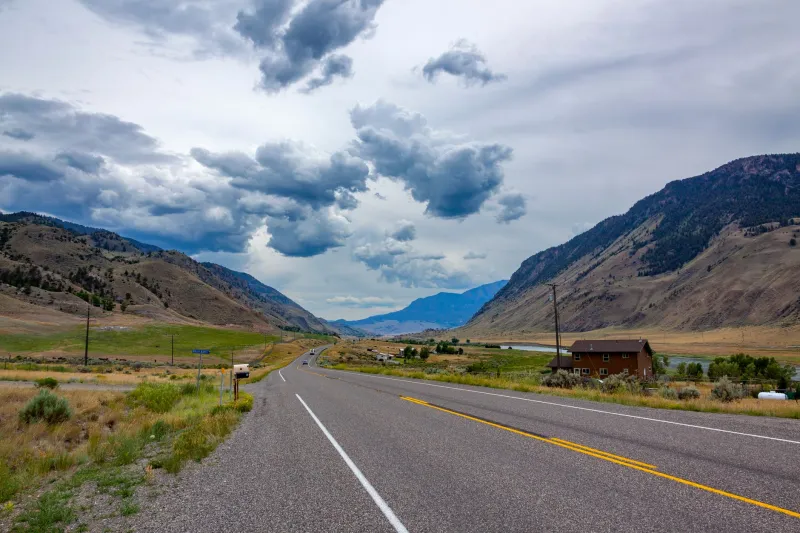
There is a particular heartbreak known only to road trippers: the moment the landscape opens up into something genuinely jaw-dropping, and there is absolutely nowhere to stop. No overlook. No gravel pullout. Just a yellow-lined shoulder, a 65 mph speed limit, and a view that exists now only in your memory and, if you're lucky, a passenger's shaky phone video.
I am here to make a controversial claim: those views are the best ones.
Not the signed vista points with the concrete barriers and the informational plaque and the family from Ohio eating gas station snacks. The other ones. The feral views. The ones the highway department didn't curate because, frankly, they couldn't be bothered to stop and appreciate them either — they had a road to build.
The Case Against the Official Overlook
Don't get me wrong — we've written lovingly about great overlooks before, and we stand by every one. But the official vista point has a structural flaw: it tells you what to look at. There's a plaque. There's a scope. There's a railing positioned by an engineer who decided, in an office somewhere, exactly where the money shot is.
The unsanctioned view has no such editorial bias. It's the landscape photobombing your commute. It's a flash flood of scenery that arrived without an appointment. And because you can't stop, you can't overthink it. You just receive it, like a gift from a relative who doesn't know how to wrap things.
Seat Selection Is Everything
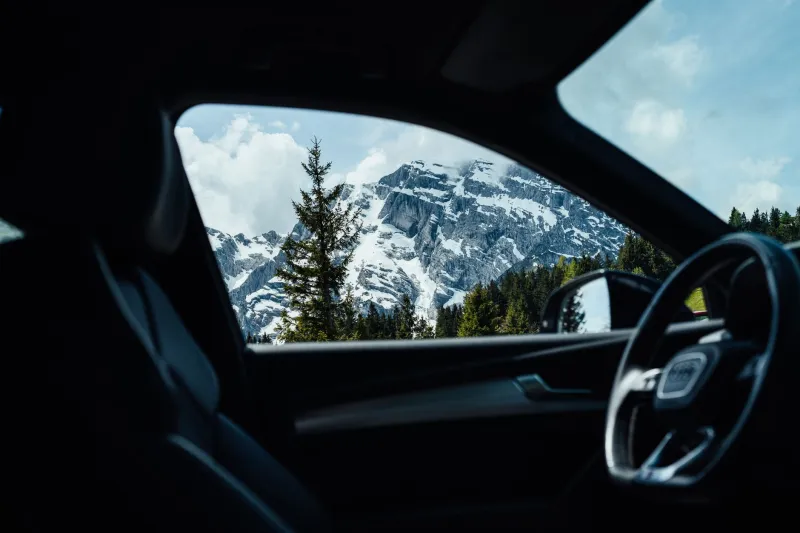
Here's the part nobody tells you: side of the car matters. This is the most under-discussed variable in American road trip planning, and I will die on this hill (ideally a hill with no shoulder, since that's the theme).
Some premier drive-by views in America, and where to sit for them:
- Going-to-the-Sun Road, Glacier National Park: Driver's side for the cliff-edge drama, but passenger's side for the actual mountains. Choose your fighter.
- US 101 along the Oregon Coast: Passenger's side, hands down. The ocean is on the west, and you didn't drive all this way to watch a hillside.
- Blue Ridge Parkway, Virginia highlands: Either seat wins — the ridgeline views alternate like a tennis match. Bring a co-pilot and share.
- I-70 through Glenwood Canyon, Colorado: Passenger's side. The Colorado River is doing its thing on the right, and the canyon walls are showing off on both.
- Highway 1, Big Sur: This one's a coin flip. Ocean on the driver's side going south, but the passenger gets it northbound. Plan your route around your seatmate's priorities. This is what love is.
How to Plan a Trip Around Looking Out a Window
This sounds like a joke, but I assure you the joke is on anyone who hasn't tried it. Route-planning for pure drive-by scenery is a legitimate discipline, and here's the method:
Step one: Pick the scenic byway over the interstate, always. America's byway program exists precisely because some federal employee drove the route and said "whoa" out loud. Trust the whoa.
Step two: Time it for the light. A view you can't stop for is a view you experience once, briefly, at speed. Golden hour multiplies the payoff. A canyon wall at 4 p.m. is nice; the same wall at 6 p.m. is a religious experience you'll have to process at the next red light.
Step three: Assign roles. Driver drives. Passenger navigates and narrates. Nobody looks at their phone, because the whole point of this trip genre is that the entertainment is outside the windshield and it does not have a replay button.
Step four: Build in decompression stops. You can't pull over for every view, but you can pull over after every run of views. Find a diner, a picnic area, a rest stop with a vending machine, and debrief. "Did you SEE that ridge?" "I saw the ridge." This conversation is the trip.
The View Is the Destination
We live in an era of must-see lists, of geotagged photo spots with hour-long lines, of national landmarks that require reservations made six months in advance. There's real value in those places. But there's also a quieter pleasure in the view that nobody booked, nobody queued for, and nobody can sell you a magnet of.
The road trip, at its best, was never really about arriving. It was about the twenty seconds of mountain between mile markers 114 and 115, seen from the passenger seat, at exactly the speed you happened to be going.
So here's the plan: pick a byway, pick a seat, and go look at America through the glass. The best overlook in the country might not have a place to park. That's not a flaw. That's the whole point.