Two People, One Phone: Surviving a Road Trip Where the Algorithm Rides Shotgun

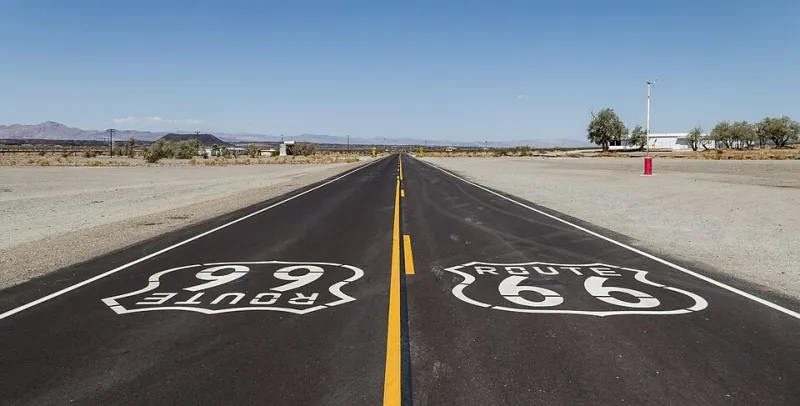
Photo: Shixart1985, CC BY 2.0, via Wikimedia Commons
Every long-haul American road trip has a cast of characters: the driver, the snacks, the playlist nobody agreed to, and — increasingly — the Algorithm. That's the voice coming from the passenger seat that says things like "recalculating" in a tone that suggests deep personal disappointment.
If you're the one behind the wheel, married to a person who treats Waze like scripture, this is your survival guide. If you're the navigator, well, you might want to read this anyway. Consider it an intervention with rest stops.
Meet the Waze Widow
The term sounds dramatic, but if you know, you know. A Waze Widow is anyone who has watched their partner dismiss a hand-painted sign for the World's Largest Ball of Sisal Twine because "it's eleven minutes off route and we're already behind schedule."
Behind schedule for what? The hotel is booked. There's no reservation in Moab until Thursday. The only deadline out here is sunset, and the Algorithm doesn't have an entry for that.
The tragedy of the Waze Widow isn't missed attractions — it's missed conversations. Nothing kills the open-road vibe like hearing "there's a faster way" for the fourth time in an hour. The interstate is already the fastest way. That's the whole deal with interstates.
Why the Algorithm Can't Be Fully Blamed
Let's be fair to the navigator for a second. The app is genuinely useful. It's saved all of us from two-hour traffic jams outside Nashville and found gas stations in the Nevada high desert when the needle was getting religious. The problem isn't the tool. It's the tyranny.
There's a difference between using a navigation app and being used by one. When the ETA becomes the trip's only metric of success, you've essentially booked a very long, very expensive flight with worse seats and worse pretzels.
The One Detour Per Tank Rule
After a decade of trial, error, and one memorable argument outside Wall Drug, my travel partner and I ratified what we call the One Detour Per Tank Rule. It's simple, it's constitutional, and it has saved countless vacations.
Here's the text of the law:
- One detour per tank of gas. The driver or the navigator may invoke it for any roadside attraction, odd museum, or diner with a mural on the side. The other party cannot veto. Eleven minutes becomes twenty, sure, but the trip keeps its soul.
- The navigator gets veto power for safety and bathroom emergencies only. "We'll miss golden hour" is not a recognized emergency. Neither is "I want to make it to Amarillo."
- Both parties get one silent hour. No route commentary, no "traffic ahead" updates, no unsolicited podcast opinions. Just road, radio, and mutual respect.
The genius of the rule is that it's finite. The Algorithm-brain doesn't have to surrender control forever — just long enough for the two-headed calf. And the serendipity-seeker knows their window is coming, so they stop fighting every exit like it's the last exit on Earth.
Give the Algorithm a Job It's Good At
Here's a compromise strategy that works suspiciously well: don't fight the navigator's love of optimization — redirect it. Have them run the trip like a logistics operation, but with the fun stuff as the deliverables.
The Algorithm-brain can find the best-reviewed barbecue in Kansas City, calculate exactly when to leave Flagstaff to catch sunrise at the rim, and locate the only laundromat for eighty miles in the Upper Peninsula. That's a superpower. Let them optimize the joy, not eliminate it.
Meanwhile, the driver keeps one sacred duty: the unexplained turn. When a brown sign says something intriguing — a state park, a historical marker, a fish hatchery, who knows — the driver gets to take it. No justification required. That's the price of admission for the passenger seat.
The Passenger's Phone Is the Real Driver
Here's the uncomfortable truth at the heart of every modern road trip: whoever holds the phone holds the trip. The person with the app decides which exits exist, which towns are "skippable," and which attractions are "on the way."
So if you're the passenger, be honest about the power you wield. Use it kindly. Read the signs out loud that the driver can't read. Say yes to the weird roadside dinosaur even though it's not in the itinerary. The driver has agreed to a social contract — their eyes stay on the road, and your eyes stay open for wonder.
And if you're the driver, remember that your navigator isn't trying to ruin the trip. They're trying to protect it, in the only language they know: efficiency. The Algorithm is a safety blanket with a British accent and opinions about your lane changes.
Recalculating, Together
The best road trips are negotiations, not itineraries. Somewhere between the fastest route and the two-headed calf is the trip you'll actually remember — the one with the wrong turn that found the overlook, the eleven-minute detour that became three hours, the gas station jerky that became a tradition.
So charge the phone, honor the rule, and take the exit. The Algorithm will recalculate. That's what it does. The question is whether you will too.